How to Achieve CNC Maintenance Cost Reduction: Replacing Hardware Counters with a FANUC Macro Program, Saving $12,720 a Year
An improvement case in CNC & Precision Machining (Maintenance): total declared cost down 100%, saving $12,720 a year (savings from: Consumable). Payback in ~8 days on a $272 investment; trust level: Unverified.
ROI is unusually high because the declared investment is very small compared with the monthly saving.
Current problem:
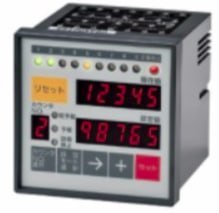
About 2 counters had to be replaced every month on average. Price per unit: $530 So: Monthly cost = $1,060 And the older the machine, the more often they failed.
Root cause:
For this kaizen I did not go after a root cause on the maintenance side. I took a completely different angle. The question was not "is it the oil mist and the heat that shorten counter life?" - it was "is there a way to count parts at all without a counter?"
Improvement mechanism:
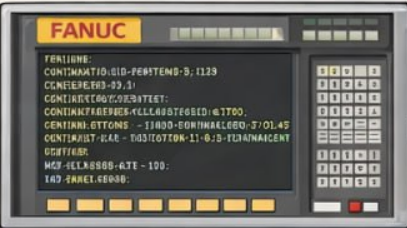
What the macro can do The program can: Count how many times a tool has been used Count output Prompt the operator to run a periodic check For example: After every 40 parts the machine displays: "Run the check - 40-piece cycle." That is a function the original hardware counter never had.
Solution:
Replace the failure-prone hardware counters (Koyo KCM-50P-1) with a software macro program running on the CNC control (proven on both FANUC and Mitsubishi). The macro fully replaces the original function - tool-use count and per-shift output - and adds a periodic inspection prompt (every 40 parts) plus logic that stops operators inflating the reported output.
Result:
Before the improvement, the cost items declared in this case ran at $1,060 per month.
After the improvement, those same items run at $0 per month.
The saving is $1,060 per month, or $12,720 per year - a 100.0% reduction measured against the cost of the items declared in this case (Consumable), not against the full product cost.
The investment is $272, itemised as 1 entries in the one-off implementation cost table.
The payback time is ~8 days.
Lessons learned:
Working through this project is what really taught me macro programming on the Takamaz lathes running FANUC controls.
Reusable knowledge
Where this applies:
Any CNC machine whose control supports macro programming (proven in production on FANUC and Mitsubishi controls).
Risks:
Operators inflating reported output: running the program with no part loaded, or re-running it, to push the count up. - Status: solved, by adding conditional lock logic in the macro code that blocks double counting.
Author's evidence:
Cost impact: the hardware counter replacement cost is gone entirely ($1,060/month within the scope of this case). - Accuracy: the per-shift output report matches the real output, with no way for an operator to tamper with it. - Alert system: the machine stops, or shows the quality-check prompt, exactly every 40 parts.
Reusable idea:
There are a great many ideas you can apply with this way of programming by macro. There is almost no limit, as long as you can think of it. Here are a few things I have actually done: - Instead of adjusting one tool in Z and then adjusting the others by hand, the others follow automatically. - Offsetting along a diagonal path to compensate for the tool being pushed away by cutting force. - Adjusting at any chosen stage within a tool's life cycle. - Timing how long a section of program takes to run, so you can verify how much a program change actually gained.
Tools and materials used in this case
- KCM-51-1 (OTHER)